The increasing cost of weather-related insurance claims in New Zealand is clear evidence of destructive winds and storms becoming more common. This severe weather is an increasingly significant workplace hazard, with past research from Otago University showing that 17% of work-related fatalities involved weather-related factors.
On construction sites, high winds can turn unsecured materials into dangerous projectiles and cause unstable structures to collapse, crush or strike workers and members of the public. A stark example occurred in December 2022, when an unforecast tornado struck the Hobsonville area. Pre-cast concrete panels were blown over on the Hobsonville Point Primary School construction project, tragically killing three workers.
All PCBUs should treat severe weather as a predictable health and safety risk. This means planning ahead and having a clear site strategy for managing adverse conditions: securing tools and materials, reinforcing fencing, scaffolding and temporary structures, and postponing outdoor or high-risk tasks until conditions are safe.
To mitigate the risk of loss or damage from natural disasters Builtin recommends:
1. Contract works insurance is in place prior to the job starting
2. Pre-start assessment of the location is conducted to identify any high risk features or potential points of failure
3. Disaster preparedness plans are already in place, including emergency procedures, evacuation routes and communication protocols
4. Materials are tied down and secured and elevated from the risk of flooding
Scaffolding collapse results in conviction
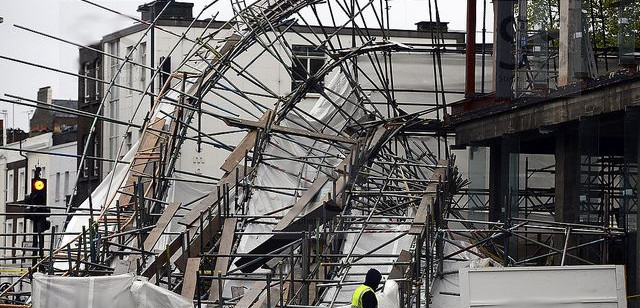
On a windy day in January 2024 a nine metre high scaffold fell onto a busy road in Auckland. Three workers were nearby and drivers had to swerve to avoid catastrophe.
WorkSafe investigated and ruled there was a “seriously deficient setup, and a blatant risk to public safety”. They found the scaffold was effectively freestanding and lacked minimum safety features. For example, it was not tied down and there were no “rakers” or diagonal braces to increase the width of the base for greater stability. The company carried out no risk assessment for the location. They were sentenced and ordered to pay $8,500 in reparations.
The deadliest scaffolding collapse occurred in the US in 1978, when 51 workers fell 170 feet after a massive collapse at a power plant that was under construction. There were no survivors. In New Zealand, in 1957, two women were killed when a scaffold collapsed on Lampton Quay in Wellington.
Simple Risk Management Checklist
Use the checklist below to lower the odds of some of the most common risks faced by construction companies and tradies happening to you and your projects.
Key Risk Checklist for Builders
Work through the checklist to see how well you’re managing the top 5 risks identified by builders. It’s recommended to use the checklist for every job or project.
Construction Project Insurance Checklist
Every building project involves risk. The risk may be higher or lower, depending on a whole range of factors, and you will need to eliminate, isolate or minimise these risks.